

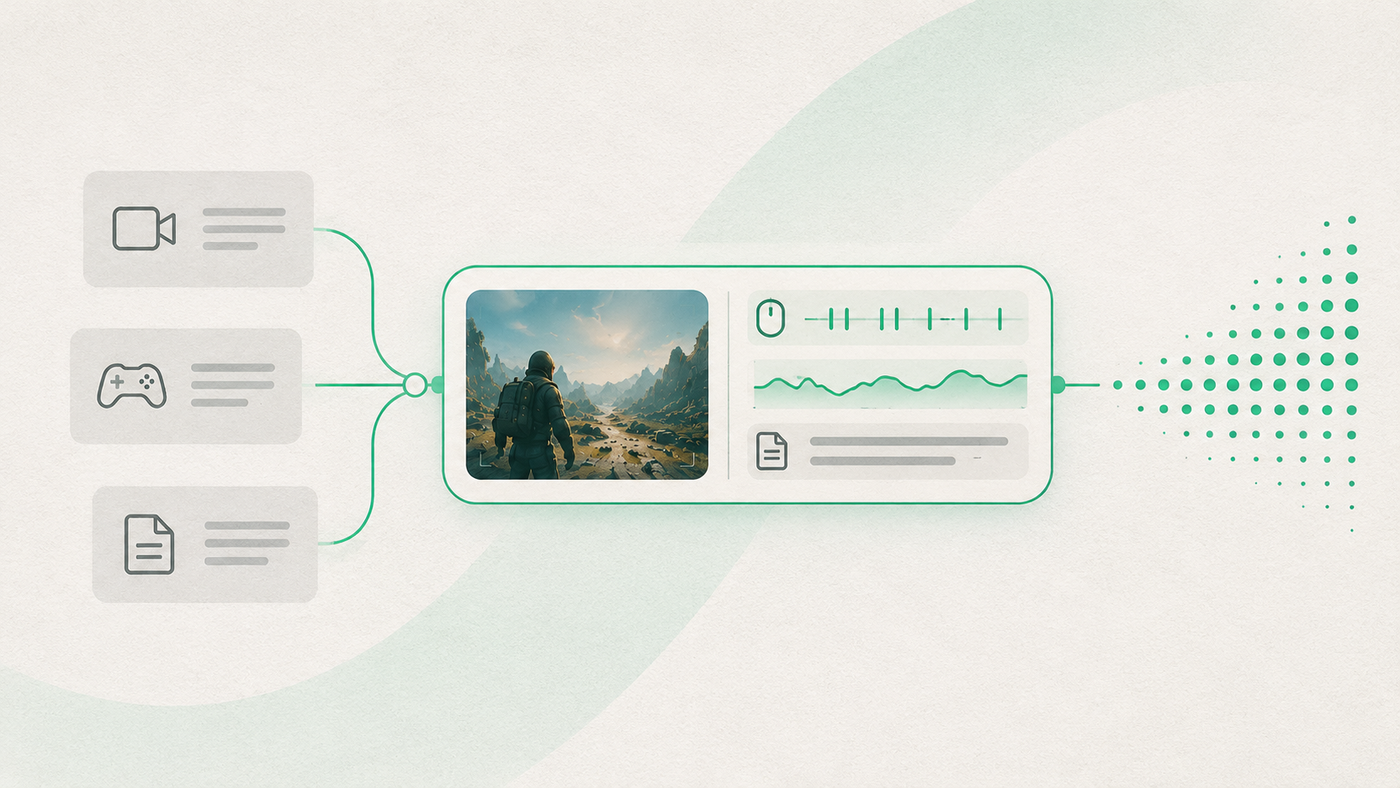
Finding a bug is one thing. Getting it into the hands of a developer with everything they need to investigate it is another.
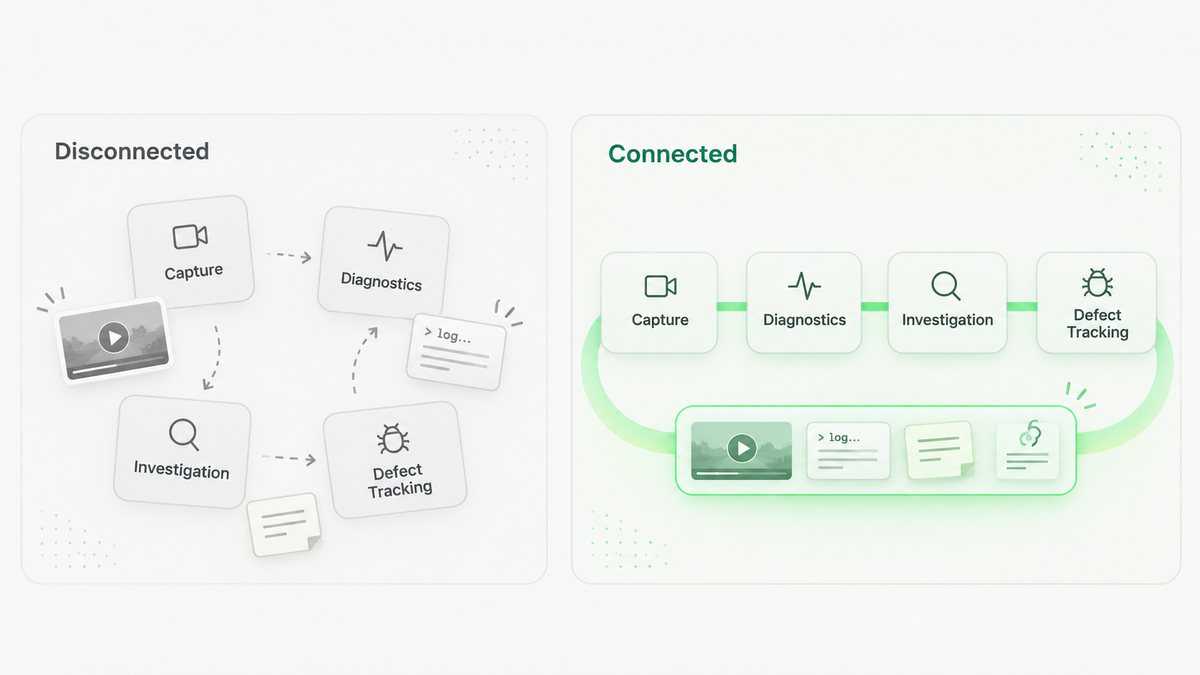
Most game studios already have tools for recording gameplay, collecting logs, monitoring performance and tracking defects. The problem is that these tools often operate independently. Testers spend time assembling information from different sources, while developers are left piecing together what happened.
It's a familiar problem in games QA, but there's another consequence that's often overlooked. When these systems are disconnected, so is much of the data they produce.
Better Evidence, Less Back and Forth
We believe the information captured when a bug occurs should remain connected throughout its lifecycle.
A gameplay recording is useful, but it's far more valuable when you can examine the inputs, performance data and logs from the same moment. Rather than handing developers a collection of files, you're giving them the context to investigate what actually happened.
The same applies to QA review. Having the original evidence alongside a report makes it easier to assess its quality, identify potential duplicates and ensure it's ready for development. That means fewer requests for additional information and less time spent going backwards through the process.
The Bigger Opportunity Is in the Data
An individual bug report tells you something went wrong. Hundreds of connected reports, supported by their original testing data, can start telling you something about the quality of the game itself.
Are particular builds generating more performance-related issues? Are defects appearing more frequently on certain hardware configurations? Are the same components repeatedly causing problems? Are reports arriving with enough information for developers to act on them?
These are valuable questions, but answering them is difficult when the underlying information is scattered across recordings, spreadsheets, monitoring tools and issue trackers.
Connecting that information makes it possible to identify patterns that might otherwise go unnoticed. It also creates opportunities to understand how effectively QA is operating, rather than relying entirely on bug counts and severity distributions.
How We're Approaching This With TopMod
This thinking is behind the way we've built Capture, Evidence and Checkpoint.
Capture records gameplay and supporting technical information. Evidence brings that information together for investigation. Checkpoint connects the evidence to the defect management and review process, helping teams validate issues before they reach development.
Because these systems are connected, the relationship between a testing session, its technical evidence and the resulting defects is preserved. That creates a much richer foundation for understanding game quality than defect records alone.
Looking Beyond Bug Counts
For years, studios have relied on metrics like open defects, severity distributions and resolution rates to understand quality. They're useful, but they only tell part of the story.
We think there's an opportunity to go further. By connecting the data generated during testing with the defects that follow, studios can begin to understand not just what is being reported, but the conditions in which issues occur, where problems are concentrated and how effectively they're being investigated.
That's what we're working towards with TopMod. A connected bug lifecycle that makes individual defects easier to investigate, while building a clearer picture of game quality across the wider project.